

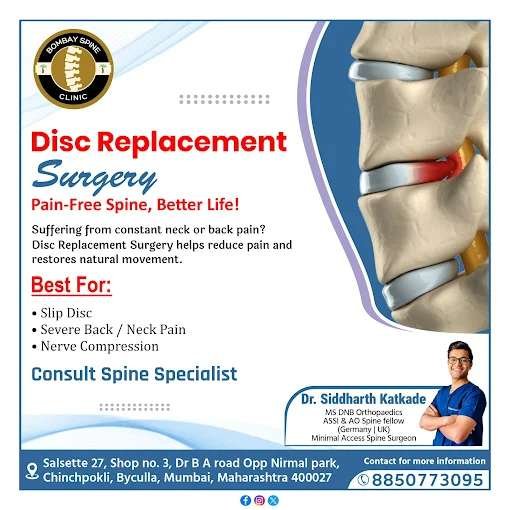
Living with persistent back or neck pain can take a deep toll on your daily life. Simple activities—such as sitting, walking, bending, or even sleeping—can become uncomfortable or unbearable. Among the many reasons people experience chronic spine-related pain, spinal disc issues rank among the most common. When conservative treatments like physiotherapy, medications, or injections no longer provide relief, Disc Replacement Surgery emerges as a modern, effective, and movement-preserving option.
This blog explores what disc replacement surgery is, who can benefit from it, and why advancements in spine care have made it one of the most promising solutions for long-term pain relief and restored mobility.
Understanding Disc Problems: Why Pain Happens
The human spine consists of a series of bones called vertebrae, cushioned by small shock absorbers known as intervertebral discs. These discs play a crucial role in:
- Allowing smooth bending and rotation
- Maintaining flexibility
- Absorbing impact during movement
Over time, due to aging, injuries, or degenerative conditions, discs can become damaged. When a disc loses its structure or cushioning abilities, issues such as slip disc (herniated disc), nerve compression, and chronic pain can follow.
Common symptoms include:
- Radiating pain in the back, neck, arms, or legs
- Numbness or tingling
- Muscle weakness
- Limited or painful movement
While many disc-related conditions can initially be managed with conservative care, certain cases require a more definitive solution.
What Is Disc Replacement Surgery?
Disc Replacement Surgery—also known as Artificial Disc Replacement (ADR)—is an advanced spinal procedure designed to remove the damaged disc and replace it with an artificial implant that mimics the natural disc’s function.
Unlike spinal fusion, which permanently joins two vertebrae and restricts movement, disc replacement:
- Preserves natural mobility
- Maintains spine alignment
- Reduces stress on adjacent discs
- Promotes faster recovery
- Helps prevent future degeneration
This surgery is particularly beneficial for individuals who want to maintain an active lifestyle without long-term movement limitations.
Who Is Disc Replacement Surgery Best For?
The advertisement highlights that disc replacement surgery is especially effective for individuals facing:
1. Slip Disc (Herniated Disc)
When the inner gel-like portion of a disc protrudes or leaks, it irritates nearby nerves, causing severe and sometimes radiating pain. Disc replacement can remove the damaged portion entirely and replace it with a fully functional artificial disc.
2. Severe Back or Neck Pain
Chronic pain that persists despite therapy, pain medication, or minimally invasive treatments often indicates that the disc damage is structural. Disc replacement addresses the root cause rather than temporarily masking symptoms.
3. Nerve Compression
Compressed nerves can cause persistent pain, numbness, or weakness. Replacing the damaged disc restores proper spacing between vertebrae, giving nerves room to function normally again.
Candidates for disc replacement usually include individuals with:
- One or two damaged discs
- No significant spinal arthritis
- Healthy surrounding bone structure
- Persistent symptoms affecting quality of life
A qualified spine specialist determines eligibility after diagnostic scans and a detailed evaluation.
Why Disc Replacement Is Considered a Breakthrough
Modern disc implants are designed using advanced biocompatible materials that support natural spine movement. The benefits include:
Restored Mobility
One of the biggest advantages of disc replacement is that it maintains natural bending, twisting, and stretching—something fusion surgery cannot offer.
Long-Term Pain Relief
By replacing the defective disc, irritation to nerves is eliminated, resulting in dramatic reduction in pain.
Reduced Risk of Adjacent Disc Degeneration
Because the spine continues to move normally, surrounding discs are not overburdened, which helps prevent future issues.
Faster Recovery Time
Most patients return to normal activities more quickly than with traditional spine surgery, depending on their health and the surgeon’s guidance.
A Specialist’s Role in Successful Treatment
The flyer mentions consultation with a spine specialist who holds advanced qualifications in orthopedic and spine surgery, including international fellowship experience. Choosing the right specialist is one of the most critical steps in ensuring the success of any spine procedure.
A well-trained spine surgeon can help you:
- Understand your condition
- Explore all treatment options
- Decide whether surgery is necessary
- Receive a personalized treatment plan
- Recover safely and effectively
Their expertise in minimally invasive and advanced spine techniques plays a major role in achieving the best outcomes.
The Procedure: What Patients Can Expect
Before surgery, patients undergo imaging tests such as MRI or CT scans. If disc replacement is deemed appropriate, the specialist explains the surgical process, risks, benefits, and recovery timeline.
During the Surgery:
- The damaged disc is removed through a minimally invasive approach.
- An artificial disc is positioned between the vertebrae.
- The implant is designed to replicate natural disc motion.
After Surgery:
- Patients are encouraged to walk soon after the procedure.
- Physical therapy supports long-term recovery.
- Many individuals return to work within a few weeks, depending on physical demands.
The ability to maintain natural spinal movement often allows patients to return to their lifestyle more confidently and comfortably.
A Better, Pain-Free Life Is Possible
Chronic back or neck pain doesn’t just affect the body—it impacts personal life, mental well-being, productivity, and joy. Disc replacement surgery offers hope for individuals who have been struggling for years without relief.
If the symptoms described earlier feel familiar, consulting a spine specialist can be the first step toward regaining control of your life. Modern advancements in spine care have made it possible for patients to live pain-free, active, and fulfilling lives once again.
The flyer highlights the availability of expert consultation at a spine clinic in Mumbai, providing access to specialized care, diagnostic services, and advanced surgical options like disc replacement.
Final Thoughts
Disc Replacement Surgery is more than a procedure—it is a transformative solution for people suffering from debilitating disc problems. Through preserved mobility, long-term relief, and modern surgical techniques, many individuals have reclaimed the life they once enjoyed.
If chronic back or neck pain has been holding you back, it may be time to explore whether disc replacement is right for you. With the right specialist guiding your journey, a healthier, pain-free spine is well within reach.


